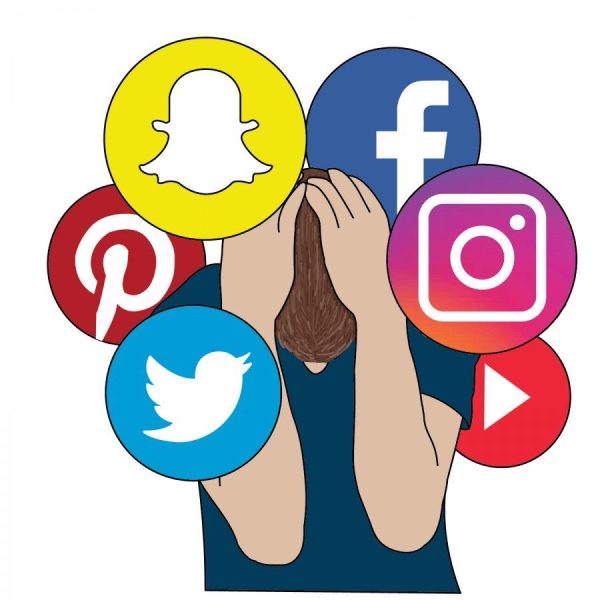
Today, it seems almost impossible to imagine life without social media. For young people, platforms like TikTok, Instagram, YouTube, and X (formerly Twitter) are part of everyday life. They are used to entertain, communicate, learn, get news, and even work. But what is the real impact of social media on teenagers’ lives?
A Connected Generation
Recent studies show that teenagers spend an average of 3 to 6 hours per day on social media. It is no longer just a space for entertainment but also a place where they build friendships, share content, and in some cases, find professional opportunities.
Keegan Lee, a 19-year-old, shared her experience: “I spent around six hours a day on apps like Snapchat, TikTok, and Instagram. I decided to disconnect for a week and experienced personal satisfaction through activities like reading, writing letters, and face-to-face interactions. This led me to extend my break to 60 days, during which I documented my journey. Now, I am a member of the Mental Health America Youth Council and director of the Log Off Movement, educating others about healthy social media use.”
The Dark Side: Pressure and Anxiety
However, not everything is positive. Psychologists warn that excessive use can have serious consequences for mental health. The phenomenon known as FOMO (fear of missing out) is becoming increasingly common: the need to be constantly connected in order not to miss out on what is happening online.
Dr. Carol Vidal, a child and adolescent psychiatrist at Johns Hopkins Children’s Center, explains: “Social media can be beneficial if used appropriately, providing access to information and a safe place for self-expression. However, excessive use may be associated with changes in brain areas related to emotions and learning.”
Cyberbullying is also a growing risk. Insults, jokes, and rumors that once might have stayed inside a classroom can now spread in seconds through posts and comments. The pressure of likes—or the lack of them—also affects teenagers’ self-esteem.
A Place for Opportunity
Even so, it would be unfair to view social media only as a problem. For many young people, it is a tool for learning and entrepreneurship. Some discover artistic talents, others stay informed about social issues, and some even generate income.
A study conducted by the Pew Research Center in April 2025 found that 44% of parents believe social media has the most negative impact on teenagers’ mental health. However, moderate social media use (one to three hours per day) was also associated with better mental health outcomes compared to low or high use (The Guardian).
Social media also allows the creation of support communities. Many groups offer spaces where teenagers can talk about mental health, identity, or personal interests, finding understanding that they may not always get in their daily environment.
The Role of Families and Schools
The question is not whether teenagers should use social media, but how to use it in a healthy way. Experts agree that the key is balance.
Dr. Arthur C. Evans Jr., CEO of the American Psychological Association, notes:“Youth use of social media is widespread. It can help them, and all of us, live more connected lives—if and only if proper supervision, regulation, and restrictions are in place.”
Parents and teachers play an essential role: accompanying, guiding, and educating about digital safety. Strict rules are not enough. Teenagers need to learn how to protect their privacy, recognize fake news, and understand that what they see online does not always reflect reality.
Toward Responsible Use
Experts recommend several strategies to promote healthier use of social media:
- Set time limits on apps.
- Talk openly at home about what is being seen and shared online.
- Verify information before reposting or believing it.
- Report cyberbullying instead of staying silent.
- Balance digital life with real life, making time for sports, reading, or face-to-face activities.
Conclusion
Social media is here to stay and has become an inseparable part of teenagers’ lives. Its impact can be both positive and negative: a place of creativity, community, and opportunities, but also a source of stress and anxiety if used without balance.