

Marking the 250th anniversary of the Declaration of Independence, King Charles and Queen Camilla arrived in Washington D.C. on April 27, 2026, for a four day state visit aimed at reaffirming the “special relationship” between the United Kingdom and the United States. Two and a half century ago, the bond between Britain and America was not one of a partnership, it was a conflict. Patriots took up arms against the crown, declaring that “all men are created equal” and that no government could rule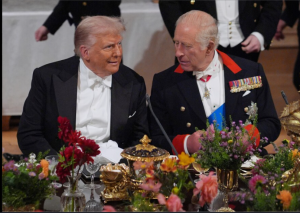 without the consent of the governed. Loyalists, by contrast, believed the colonies were stronger under British rule and that reconciliation was possible. Both sides were passionate. Both sides were convinced they were right. And yet, history did not end with independence, it evolved. The recent visit of King’s visit attracted attention worldwide. During the visit, the King met the American leaders, attended events, and spoke about cultural connections between the United States and the United Kingdom.
On April 28, 2026, he delivered a historic address to the joint meeting of the US Congress, in the Capitol building, in the very city built to represent the ideals the patriots fought for. In his address, King Charles highlighted that the partnership was “born out of dispute, but no less strong for it”. He explained that the relationship evolved from a “fundamental disagreement” over principles like “no taxation without representation” that once drove colonists to revolution is now a shared democratic value both nations uphold. What the patriots demanded in 1776, liberty, self governance, and democratic accountability, Britain itself eventually embraced. It’s astonishing that nearly 250 years later, King Charles himself stood before the US Congress to remind Americans of the very values their ancestors fought for. It is remarkable that it took a British King, the descendant of the very monarchy patriots rebelled against, to stand in Washington DC and remind the nation of the ideals of liberty, self governance, and democratic accountability that were born from that conflict. The King did not come to reopen old wounds, but to honor the legacy of both patriots and loyalists by showing that their struggle ultimately led to one of history’s greatest alliances.
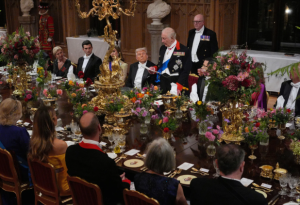 He described the US-UK bond as “priceless, eternal, irreplaceable, and unbreakable”, he added that it was “forged in the fire of conflict” and “fortified through our shared endeavors”, noting that the two nations remain “instinctively like minded”. As America celebrates it’s 250th birthday, King Charles framed the semiquincentennial not as a reminder of old grievances, but as proof of something remarkable, that former adversaries can become the closest of allies. King Charles highlighted the US-UK relationship as a 400 year story of “reconciliation, renewal, and remarkable partnership,” urging that their alliance, though rooted in past disputes, must not rely on history alone to face modern challenges. He emphasized shared values, democratic, and legal traditions. The loyalists who once feared separation may have been wrong about the outcome, but the King’s visit suggests they weren’t entirely wrong about the possibility of unity.